Cappadocia Travel Guide | History, Fairy Chimneys & Valleys
Comprehensive guide to Cappadocia. *Site & SEO infrastructure for sale.* Discover underground cities, valleys, and hot air balloons.


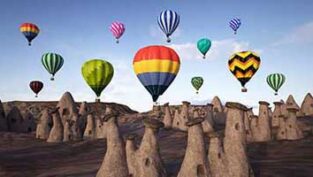
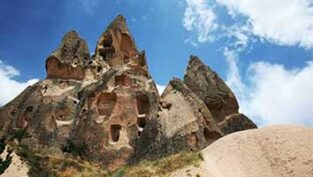
The otherworldly landscape of Cappadocia stands globally as one of the most breathtaking and visually enchanting geological wonders on earth. Situated in the central Anatolian heartland of Turkey, this legendary UNESCO World Heritage region serves as a magnificent open-air sanctuary where millions of years of volcanic erosion blend seamlessly with thousands of years of human cave-carving history. For international travelers and adventure seekers alike, watching hundreds of hot air balloons drift over the volcanic valleys at dawn offers a truly unforgettable holiday highlight. From subterranean stone fortresses to spectacular rock-cut Byzantine monasteries, exploring historic Cappadocia remains a premier, bucket-list destination for a premium Turkish vacation.
The incredible story of Cappadocia begins roughly sixty million years ago with the violent eruptions of three massive regional volcanoes: Mount Erciyes, Mount Hasan, and Mount Melendiz. Over millennia, these geological giants blanketed the entire Central Anatolian plateau in thick layers of volcanic ash, which gradually cooled and compressed into a soft, easily carvable rock known as tuff.
Subsequent eras of relentless wind, heavy rain, and seasonal floodwaters carved this fragile landscape, eroding the softer tuff layers while leaving harder basalt caps intact. This unique natural process gave birth to the iconic, towering rock pillars known worldwide as "Fairy Chimneys."
While nature sculpted the exterior surfaces, human hands completely hollowed out the interior spaces of Cappadocia over thousands of years. The region's strategic location along the ancient Silk Road made it a highly contested territory, frequently exposed to invading armies, Roman legions, and nomadic raids. Finding themselves in a vulnerable position on the open plains, the indigenous Hittite and early Phrygian communities utilized the soft volcanic stone to engineer massive, sophisticated underground cities. These hidden subterranean metropolises extended multiple levels deep beneath the earth, featuring complex ventilation shafts, rolling stone blast doors, deep water wells, and large storage rooms capable of protecting thousands of citizens for months.
During the Roman and early Byzantine imperial eras, Cappadocia transformed into a powerful bastion of early Christian theology and monastic life. Driven by a desire for spiritual isolation and protection from Roman persecution, thousands of devout monks, hermits, and Christian families fled to these remote volcanic valleys. Led by influential thinkers like the Cappadocian Fathers, they carved out entire monastic complexes, communal refectories, and hundreds of rock-cut sanctuaries directly into the towering cliffs. This golden age of religious art reached its peak between the 9th and 11th centuries, when local artisans painted the dark cave interiors with vibrant, highly detailed Byzantine frescoes depicting biblical stories.
Following the arrival of the Seljuk and Ottoman empires, the region settled into a peaceful, multicultural rhythm, where local Christian and Muslim communities lived side by side in the unique rock-cut villages. The ancient cave complexes remained fully utilized as cool agricultural storage centers, pigeon houses, and traditional troglodyte residences well into the modern era. Today, systematic international protection efforts and ongoing restoration projects have preserved this delicate historical landscape.
Cappadocia has undergone a brilliant cultural renaissance, transforming its ancient stone architecture into world-class boutique cave hotels and outdoor museums that offer modern global travelers a rare opportunity to step directly into a living fairy tale.
Derinkuyu Underground City stands as the deepest excavated subterranean network in Cappadocia, extending approximately eighty-five meters beneath the surface. Carved out over centuries by early communities seeking refuge from foreign invasions, this massive hand-carved fortress could comfortably house up to twenty thousand citizens simultaneously alongside their livestock.
The sophisticated complex features eight open levels containing stables, cellars, storage rooms, communal refectories, and a unique cruciform theological school. Visitors can walk through the narrow, sloping stone tunnels to see the massive, circular rolling stone doors designed to seal off sections against intruders, showcasing an unparalleled feat of ancient security engineering.
The Göreme Open Air Museum is a spectacular, sprawling monastic complex that forms the cultural and spiritual core of Cappadocia's historical significance. This extensive cluster of rock-cut churches, chapels, and monasteries was carved out by early Christian monks between the 9th and 11th centuries, showcasing elite ecclesiastical design.
The site features world-renowned sanctuaries like the Buckle Church (Tokalı Kilise) and the spectacular Dark Church (Karanlık Kilise). Because the Dark Church receives minimal natural light, its magnificent Byzantine frescoes depicting the life of Christ remain incredibly vibrant, detailed, and beautifully preserved, offering an unmatched look at classical Christian art.
Ihlara Valley is a magnificent, sixteen-kilometer-long volcanic canyon carved out by the Melendiz River over millions of years. Reaching depths of up to one hundred meters, this breathtaking canyon offers a lush, green microclimate that stands in stark, beautiful contrast to the dry volcanic plains of Central Anatolia.
The steep cliff walls shelter thousands of ancient rock-cut dwellings and early Byzantine cave churches decorated with unique, Eastern-influenced frescoes. Walking along the peaceful, shaded riverside pathways allows travelers to explore isolated historical sanctuaries like the Hyacinth Church and the Fragrant Church while enjoying the soothing sounds of cascading water.
Kaymaklı Underground City is another magnificent underground marvel, historically connected to Derinkuyu via a system of long, subterranean tunnels. While Derinkuyu is famous for its vertical depth, Kaymaklı is celebrated as the widest and most horizontally extensive underground city excavated within the volcanic plateau.
Of the eight levels engineered into the soft tuff rock, four are currently illuminated and open to the public. The organized layout clearly showcases specialized zones for copper smelting, massive communal wine presses, large wheat storage bins, and family living quarters, highlighting the highly coordinated municipal structure of these ancient subterranean societies.
Love Valley is one of the most famous and visually striking landscape features in Cappadocia, named after its spectacular collection of unique, pencil-shaped rock formations. These towering, slender fairy chimneys rise up to forty meters from the valley floor, capped with harder, darker volcanic stone.
The valley's grand scale and open topography make it a premier destination for morning hiking excursions and a legendary flight path for hot air balloons. Standing along the elevated rim offers visitors panoramic views over the white and pink ridges, providing a perfect backdrop for dramatic landscape photography.
Pasabag, traditionally known as Monks Valley, features some of the most striking, highly developed multi-headed fairy chimneys found anywhere in the world. These unique mushroom-shaped rock formations boast double and even triple basalt caps, created by uneven erosion rates across different volcanic ash layers.
The valley served as a favored retreat for early Christian ascetics, including hermits who carved peaceful living spaces directly into the three-headed stone pillars. Visitors can step inside the beautifully preserved rock chapel dedicated to Saint Simeon, exploring the tiny sleeping platforms and prayer rooms where ancient monks sought spiritual isolation.
Pigeon Valley is a scenic, winding valley stretching between the towns of Göreme and Uçhisar, named after the thousands of small, hand-carved dovecotes that line the volcanic cliffs. Over centuries, local farmers meticulously carved these specialized bird houses into the soft rock faces to collect valuable pigeon droppings.
The collected fertilizer was essential for maintaining the region's famous grape vineyards and fruit orchards, showcasing a sophisticated historical relationship between human agriculture and the natural environment. The valley features beautiful walking trails that wind past ancient rock structures, offering stunning views of Uçhisar Castle.
Uçhisar Castle stands proudly as the absolute highest point in the entire Cappadocian region, visible for miles around as a massive, natural volcanic rock citadel. Perforated by hundreds of hand-carved tunnels, secret staircases, and hollowed-out living rooms, this giant rock formation served as a primary strategic fortress during the Roman, Byzantine, and Seljuk eras.
Climbing the steps up to the top summit of the castle rewards travelers with a breathtaking, unobstructed $360^\circ$ panoramic view over the surrounding valleys, fairy chimneys, and the distant, snow-capped peak of Mount Erciyes, making it the premier location to watch the spectacular Anatolian sunset.


👉 “Kids Under 5 Go Free!”
👉 ➤ Contact us for booking
Standard Private from 999 € / VIP All-Inclusive from 1899 € per person


👉 “Kids Under 5 Go Free!”
👉 ➤ Contact us for booking
Standard Private from 699 € / VIP All-Inclusive from 1299 € per person


👉 “Children under 5 years old stay free!”
👉 ➤ Contact us for booking
Standard Private Tour starts from €799 , while VIP All-Inclusive Tour starts from € 1469 per person .


“100% On-Time Return Guarantee to Kusadasi Port”
Approx. 14 - 16 Hours (Intensive Full-Day Fly-In & Same-Day Return / No Hotel Needed)100% Non-Residential. You will return to your Kusadasi hotel/resort on the very same evening.03:00 AM - 03:30 AM (Strictly synchronized with domestic flight schedules to catch the Cappadocia sunrise windows)👉 “Kids Under 5 Go Free!”
👉 ➤ Contact us for booking
Standard Private from 245 € / VIP All-Inclusive from 1199 € per person

👉 “Kids Under 5 Go Free!”
👉 ➤ Contact us for booking
Standard Private from 299 € / VIP All-Inclusive from 1,199 € per person


“100% On-Time Return Guarantee to Kusadasi Port”
👉 “Kids Under 5 Go Free!”
👉 ➤ Contact us for booking
Standard Private from 145 € / VIP All-Inclusive from 245 € per person

“100% On-Time Return Guarantee to Kusadasi Port”
“Kids Under 5 Go Free!”
➤ Contact us for booking
Standard Private from 135 € / VIP All-Inclusive from 395 € per person

MAKSİMUM BİLGİSAYAR PAZ.
İÇ VE DIŞ TİC.LTD.ŞTİ.
Adres: Cumhuriyet Mahallesi, Bizimkent, Bizimçarşı,
No: 32-33, Beylikdüzü, İstanbul
Telefon: +90 534 890 05 20
E-posta: info@maxwebtasarim.com