Pamukkale & Hierapolis Guide | History, Travertines & Thermal Pools
Comprehensive guide to Pamukkale. *Site & SEO infrastructure for sale.* Explore the white travertines, hot springs, and Hierapolis ruins.




The breathtaking natural wonder of Pamukkale, seamlessly paired with the sprawling ancient ruins of Hierapolis, forms one of the most spectacular and visually unique destinations in the entire Mediterranean basin. Situated in the inland Denizli province of southwestern Turkey, this combined UNESCO World Heritage site serves as a magnificent sanctuary celebrating both geological marvels and classical Roman healing traditions. For international travelers and wellness enthusiasts alike, walking along these shimmering white calcium terraces and exploring the surrounding monumental heritage offers an unforgettable journey. From therapeutic thermal springs to massive imperial necropolises, a visit to Pamukkale stands as a premier showcase of nature's beauty and ancient architectural grandeur.
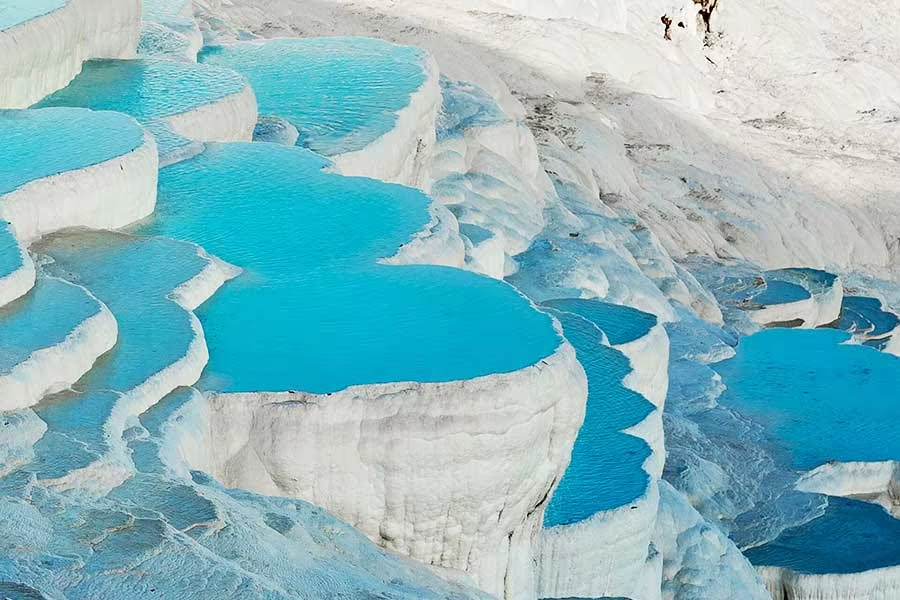
The rich history of Pamukkale and Hierapolis is deeply intertwined with the powerful thermal waters that have cascaded down the cliffside for hundreds of thousands of years. Long before the first stone monuments were erected, indigenous Anatolian communities regarded the steaming, mineral-rich springs as a sacred site of divine power, attributing the unique landscape to the direct handiwork of the gods. The water, heavily loaded with calcium bicarbonate, cools as it meets the open air, causing massive amounts of pure white calcium carbonate to precipitate and form the iconic, snow-white travertine terraces that give the site its modern Turkish name, meaning "Cotton Castle."
The definitive transformation of this natural wonder into a synchronized classical city occurred during the Hellenistic period, around the 2nd century BC. King Eumenes II of Pergamum established a formal settlement directly on the plateau above the white terraces, naming it Hierapolis. While some historical accounts suggest the city was named after Hiera, the legendary wife of Telephus (the mythical founder of Pergamum), it also directly translated to the "Holy City" due to the high density of temples, oracles, and sacred springs scattered across the plateau. The city was meticulously designed with a grand Hellenistic grid system, rapidly developing into a prosperous commercial hub that successfully integrated local wool production, textile dyeing industries, and international wellness tourism.
The absolute apex of wealth and regional dominance for Hierapolis arrived after it came under direct Roman imperial administration. Following a series of devastating earthquakes that completely leveled the older Hellenistic structures, Roman emperors poured immense capital into rebuilding the city on a monumental scale. During the 2nd and 3rd centuries AD, Hierapolis flourished as a world-renowned luxury spa resort, attracting wealthy patricians, imperial statesmen, and ailing citizens from every corner of the Roman Empire who sought the documented healing properties of the hot springs. The city expanded with grand public bath complexes constructed from massive stone blocks, highly intricate triumphal arches, and a sophisticated network of clay pipes that distributed thermal waters to private villas and public fountains alike.
Beyond its identity as a playground for Roman luxury and pagan healing cults, Hierapolis served as a critical arena for dramatic spiritual transformations during late antiquity. The city became heavily associated with early Christian history through the ministry and martyrdom of Saint Philip the Apostle, who arrived in the region to preach the gospel. Philip's dramatic execution by local pagan authorities deeply impacted the community, and when the Roman Empire officially transitioned to Christianity, the city underwent a total cultural remodeling. Massive pagan temples were dismantled to provide building materials for grand Christian basilicas, turning the ancient spa city into an influential Byzantine bishopric and a major pilgrimage center centered around the sacred mountain shrine of Saint Philip.
The eventual decline of this grand imperial spa metropolis was driven by the unstable geology that originally gave it birth. Situated directly over a highly active tectonic fault line, Hierapolis was repeatedly battered by catastrophic earthquakes over the centuries. By the late medieval period, the continuous seismic activity, combined with shifting trade routes and regional conflicts, led to the city's gradual abandonment. Over time, the relentless calcium springs partially calcified some of the ruined stone structures, preserving them in a unique mineral casing. Today, systematic international excavations continue to reveal spectacular treasures, offering modern travelers an unparalleled opportunity to explore classical history alongside one of the world's most spectacular natural landscapes.
The Apollo Temple served as the primary pagan sanctuary of Hierapolis, dedicated to the city's divine patron deity, the god of light, music, and prophecy. Originally constructed in the Hellenistic period and heavily remodeled by Roman engineers, this grand religious complex sat directly over a major geological fault line.
The temple complex featured a grand marble staircase leading to a sacred inner chamber surrounded by towering columns. The site was intentionally aligned with the natural features of the landscape, emphasizing the deep connection between classical civic religion, imperial authority, and the mysterious subterranean energies of the thermal plateau.
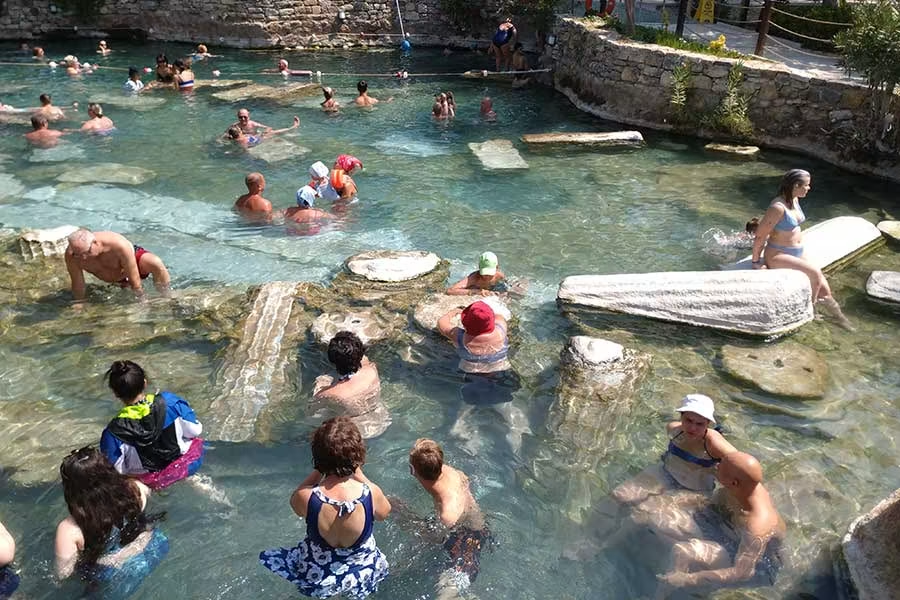
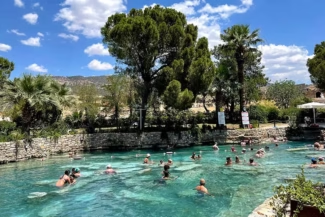
The Cleopatra Antique Pool is a world-renowned, naturally heated thermal reservoir that offers visitors the unparalleled experience of swimming amidst authentic classical antiquity. Formed during a catastrophic earthquake that caused the surrounding marble porticoes of the sacred spa to collapse into the spring basin, the pool remains filled with crystal-clear, mineral-rich water.
Maintained at a constant, comfortable temperature of approximately $36^\circ\text{C}$ ($97^\circ\text{F}$), the effervescent waters are rich in calcium, magnesium, and bicarbonate. Swimmers can float directly over genuine fluted Roman columns and carved marble capitals that rest on the pool floor, experiencing the exact same therapeutic luxury enjoyed by ancient imperial aristocrats centuries ago.
The Domitian Gate stands as a majestic, triple-arched stone portal that marked the formal northern entrance into the fortified metropolis of Hierapolis. Constructed in the late 1st century AD by Julius Frontinus, the proconsul of Asia, the gate was dedicated to Emperor Domitian and served as a powerful symbol of Roman imperial authority.
Built from massive, precisely carved limestone blocks, the monumental structure features beautifully detailed circular flanking towers and a grand classical frieze. The gate opened directly onto the city's main paved thoroughfare, welcoming ancient travelers, merchant caravans, and weary pilgrims into the bustling commercial and healing districts of the spa city.
Frontinus Street was the primary commercial and ceremonial avenue of Hierapolis, stretching over one kilometer directly through the heart of the ancient city grid. Built concurrently with the northern gate, this broad thoroughfare was fully paved with massive, durable limestone slabs and lined on both sides by grand covered porticoes.
Underneath the heavy street paving stones ran a highly sophisticated municipal sewage system that efficiently drained the large public bath complexes. Walking along this historic avenue today allows visitors to see the remains of specialized merchant shops, ancient public fountains, and the impressive civic layout that handled thousands of daily visitors during the height of the Roman Empire.
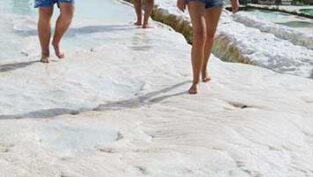
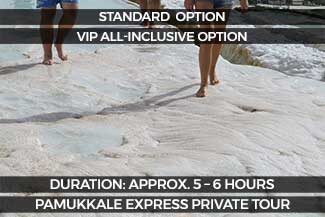
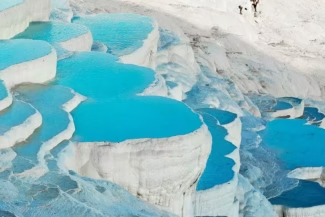
The Main Travertine Terraces form the breathtaking natural core of Pamukkale, presenting a surreal cliffside landscape of brilliant white mineral shelves and cascading turquoise pools. Created by the continuous flow of thermal water saturated with calcium carbonate, these natural formations look exactly like a massive mountain of snow rising from the plains.
To protect the delicate geological structures from erosion, visitors are required to walk entirely barefoot along a dedicated, designated path. Exploring these cascading terraces allows travelers to wade through warm, milky mineral waters while enjoying panoramic views over the surrounding valleys, capturing the true essence of this natural wonder.
The Martyrium of Saint Philip is a deeply revered early Christian pilgrimage complex situated on an elevated hill overlooking the main city plateau. Built in the early 5th century AD, this unique, octagonal stone sanctuary was constructed directly over the traditional site where the Apostle Philip was martyred.
The building's sophisticated octagonal design represents a masterpiece of Byzantine religious architecture, featuring radiant chapels, central prayer chambers, and a nearby large processional staircase. Recent archaeological discoveries have also uncovered the actual 1st-century tomb of the saint nearby, making this complex one of the most important historical sites for global spiritual travelers.
The Northern Necropolis of Hierapolis is a vast, sprawling city of the dead that extends for over two kilometers along the approach to the city's main gates. Because the hot springs attracted thousands of wealthy, elderly, and terminally ill patients seeking cures, the city developed an exceptionally large and diverse burial ground over the centuries.
The necropolis features more than twelve hundred perfectly preserved tombs, ranging from simple limestone sarcophagi to massive family tumuli and elaborate, house-like sepulchers. Walking through this quiet archaeological zone provides an intimate look at ancient burial customs, epigraphy, and the diverse cultural backgrounds of the people who traveled to these healing waters.
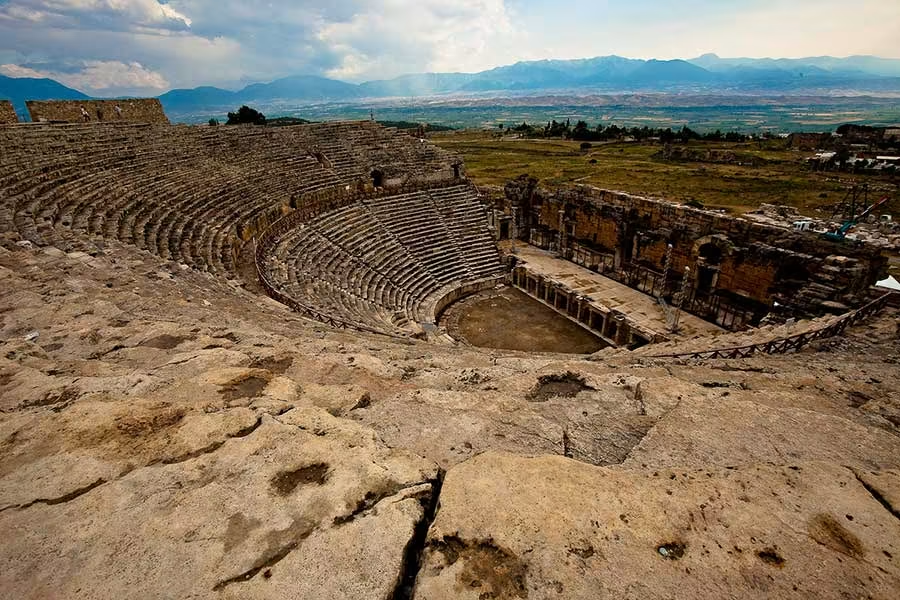
The colossal Roman Theatre of Hierapolis stands carved directly into the hillside above the city plateau, ranking as one of the most perfectly preserved and structurally complete ancient performance arenas in Turkey. Constructed under the reigns of Emperors Hadrian and Septimius Severus, this grand theater could hold up to fifteen thousand spectators.
The theatre is globally celebrated for its magnificent, highly detailed scenae frons (stage building), which features three tiers of columns decorated with intricate marble relief carvings depicting mythological scenes, imperial battles, and festivals dedicated to Apollo and Artemis. The acoustics remain flawless, offering modern visitors sweeping, unobstructed views over the entire white travertine landscape below.
The South Byzantine Gate was constructed during the late 4th century AD as part of a massive defensive wall project designed to protect Hierapolis against invading forces. Unlike the grand, ornamental arches of the earlier Roman gates, this entrance was built with security as the absolute priority, using recycled marble blocks from older monuments.
Flanked by two massive, heavy stone towers, the gate features a narrower entry portal that could be easily closed off and defended during times of conflict. The structure stands as an important historical marker, illustrating the dramatic transition of Hierapolis from an open, luxurious Roman spa resort into a heavily fortified Byzantine Christian stronghold.
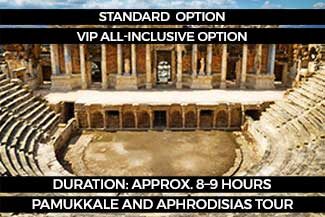

“100% On-Time Return Guarantee to Kusadasi Port”
“Kids Under 5 Go Free!”
➤ Contact us for booking
Standard Private from 210 € / VIP All-Inclusive from 295 € per person

“100% On-Time Return Guarantee to Kusadasi Port”
“Kids Under 5 Go Free!”
➤ Contact us for booking
Standard Private from 195 € / VIP All-Inclusive from 270 € per person


👉 “Kids Under 5 Go Free!”
👉 ➤ Contact us for booking
Standard Private from 199 € / VIP All-Inclusive from 499 € per person

Quick Details:
“Kids Under 5 Go Free!”
Contact us for booking
Standard Private from 160 € / VIP All-Inclusive from 260 € per person
“100% On-Time Return Guarantee to Kusadasi Port”
“Kids Under 5 Go Free!”
➤ Contact us for booking
Standard Private from 195 € / VIP All-Inclusive from 270 € per person

Quick Details:
“Kids Under 5 Go Free!”
Contact us for booking
Standard Private from 125 € / VIP All-Inclusive from 195 € per person

Quick Details:
“Kids Under 5 Go Free!”
Contact us for booking
Standard Private from 180 € / VIP All-Inclusive from 255 € per person

MAKSİMUM BİLGİSAYAR PAZ.
İÇ VE DIŞ TİC.LTD.ŞTİ.
Adres: Cumhuriyet Mahallesi, Bizimkent, Bizimçarşı,
No: 32-33, Beylikdüzü, İstanbul
Telefon: +90 534 890 05 20
E-posta: info@maxwebtasarim.com