The Great Theatre: The Monumental Masterpiece of Ephesus
Discover the Great Theatre in Ephesus. Book an elite, shopping-free private tour from Kusadasi to witness this massive Roman masterpiece.
For global travelers seeking to witness the sheer scale and cultural sophistication of Roman entertainment architecture, the Aegean coast is the ultimate destination. Beyond the intimate temples and administrative blocks, the true majesty of public life in antiquity is anchored in its massive performance arenas. Experiencing this colossal stone monument through tailored private tours from Kusadasi ensures that you step into the world's grandest historical stages with ultimate physical comfort, elite academic guiding, and a strict shopping-free guarantee that respects your time.
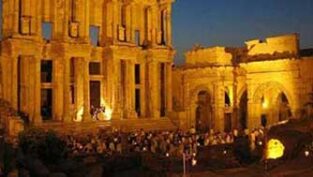
To truly comprehend the monumental scale of this structure, one must understand that the Great Theatre of Ephesus was the single largest outdoor performance venue in the entire Roman province of Asia. Originally carved into the steep western slopes of Mount Panayır during the Hellenistic period and heavily expanded by Emperors Claudius, Nero, and Trajan, this breathtaking arena could accommodate an estimated 25,000 spectators simultaneously.
It was not merely a venue for artistic expression; it was the intense social and political epicenter of the metropolis where city assemblies were held, imperial decrees were announced, and dramatic gladiatorial combats were staged before passionate crowds.
The engineering design of this giant structure demonstrates an absolute mastery of acoustics and mathematics, ensuring that every spectator could enjoy a flawless theatrical experience.
The semicircular seating area, known as the cavea, is divided into three massive horizontal tiers consisting of 66 rows of marble benches. The precise angle of the slope was calculated by ancient masters to create a natural acoustic amplification system. Standing in the exact center of the orchestra floor, even a soft whisper travels effortlessly to the highest rows of the upper tier, allowing ancient audiences to hear every line of a Greek tragedy or Roman political speech without the aid of modern electronic sound systems.
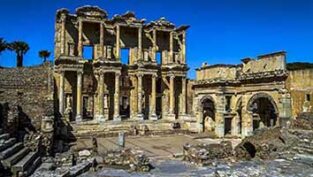
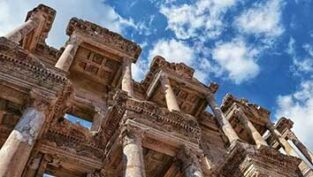
The stage building (scenae frons) was a magnificent three-story structure standing over 18 meters high. Decorated with elaborate marble columns, niches housing imperial statues, and intricate reliefs depicting mythological scenes, this monumental backdrop featured five grand bronze doors that opened directly onto the performance platform, creating a dramatic visual impact for arriving dignitaries.
Navigating the historic orchestra floor with a senior historical guide reveals deep connections to early Christian history and imperial politics that standard commercial group tours rarely explore in depth.
The Great Theatre serves as the authentic setting for one of the most famous events recorded in the biblical New Testament. In the 1st century AD, a wealthy silversmith named Demetrius, who made a fortune selling silver shrines of Artemis, sparked a massive public riot against Saint Paul’s Christian preaching. A crowd of thousands rushed into the theatre, shouting "Great is Artemis of the Ephesians!" for two continuous hours, an event that directly shaped the expansion of early Christianity across the Mediterranean basin.
During the late Roman period, the orchestra floor was modified with high protective marble walls to safely host ferocious gladiatorial games and wild animal fights. Recent archaeological excavations just outside the theatre complex confirmed the presence of a dedicated gladiatorial cemetery, revealing fascinating insights into the diet, injuries, and elite training regimes of these ancient warriors.
Exploring a stone monument of this massive scale requires strategic timing to completely avoid the intense midday heat and the disruptive, noisy crowds of mass cruise tourism.
Opting for an elite private excursion allows you to experience the Great Theatre with absolute exclusivity. Traveling in a premium, climate-controlled executive vehicle ensures that you arrive at the archaeological site relaxed and fully prepared. Your dedicated private guide will lead you through the grand vaulted entrance tunnels (vomitoria) precisely when the large commercial tour groups have departed, allowing you to absorb the vastness of the arena in peaceful serenity.
Free from forced, modern-day commercial shopping detours, your entire day is focused strictly on pure luxury exploration, profound education, and world-class regional hospitality.
Yes, the lower and middle tiers are fully open for visitors to climb and explore. Climbing to the higher rows offers an unparalleled, panoramic view over the entire city of Ephesus down to the ancient Harbor Street.
The theatre is located near the intersection of Curetes Street and Harbor Street, making it one of the final, magnificent highlights you explore before reaching the lower exit gate where your private driver will be waiting.
To protect the delicate 2,000-year-old marble foundations from structural vibration, large-scale public concerts are heavily restricted, but the site remains perfectly preserved for quiet architectural appreciation and historical study.





👉 “Kids Under 5 Go Free!”
👉 ➤ Contact us for booking
Standard Private from 199 € / VIP All-Inclusive from 499 € per person

Quick Details:
“Kids Under 5 Go Free!”
➤ Contact us for booking
Standard Private from 110 € / VIP All-Inclusive from 180 € per person

Quick Details:
Approx. 7 - 8 Hours (Optimized Premium Shore Excursion Schedule)“Kids Under 5 Go Free!”
➤ Contact us for booking
Standard Private from 110 € / VIP All-Inclusive from 180 € per person


“Kids Under 5 Go Free!”
➤ Contact us for booking
Standard Private from 135 € / VIP All-Inclusive from 195 € per person


Quick Details:
“Kids Under 5 Go Free!”
➤ Contact us for booking
Standard Private from 125 € / VIP All-Inclusive from 195 € per person

Quick Details:
“Kids Under 5 Go Free!”
➤ Contact us for booking
Standard Private from 115 € / VIP All-Inclusive from 195 € per person
“Kids Under 5 Go Free!”
Contact us for booking
Standard Private from 115 € / VIP All-Inclusive from 195 € per person

“Kids Under 5 Go Free!”
➤ Contact us for booking
Standard Private from 115 € / VIP All-Inclusive from 180 € per person
Quick Details:
“Kids Under 5 Go Free!”
Contact us for booking
Standard Private from 110 € / VIP All-Inclusive from 185 € per person

“Kids Under 5 Go Free!”
Contact us for booking
Standard Private from 75 € / VIP All-Inclusive from 135 € per person
Quick Details:
“Kids Under 5 Go Free!”
Contact us for booking
Standard Private from 115 € / VIP All-Inclusive from 195 € per person

Quick Details:
“Kids Under 5 Go Free!”
Contact us for booking
Standard Private from 115 € / VIP All-Inclusive from 195 € per person
Quick Details:
“Kids Under 5 Go Free!”
➤ Contact us for booking
Standard Private from 165 € / VIP All-Inclusive from 245 € per person

Quick Details:
Approx. 7 - 8 Hours (Optimized Premium Shore Excursion Schedule)“Kids Under 5 Go Free!”
➤ Contact us for booking
Standard Private from 110 € / VIP All-Inclusive from 180 € per person

MAKSİMUM BİLGİSAYAR PAZ.
İÇ VE DIŞ TİC.LTD.ŞTİ.
Adres: Cumhuriyet Mahallesi, Bizimkent, Bizimçarşı,
No: 32-33, Beylikdüzü, İstanbul
Telefon: +90 534 890 05 20
E-posta: info@maxwebtasarim.com